About the session
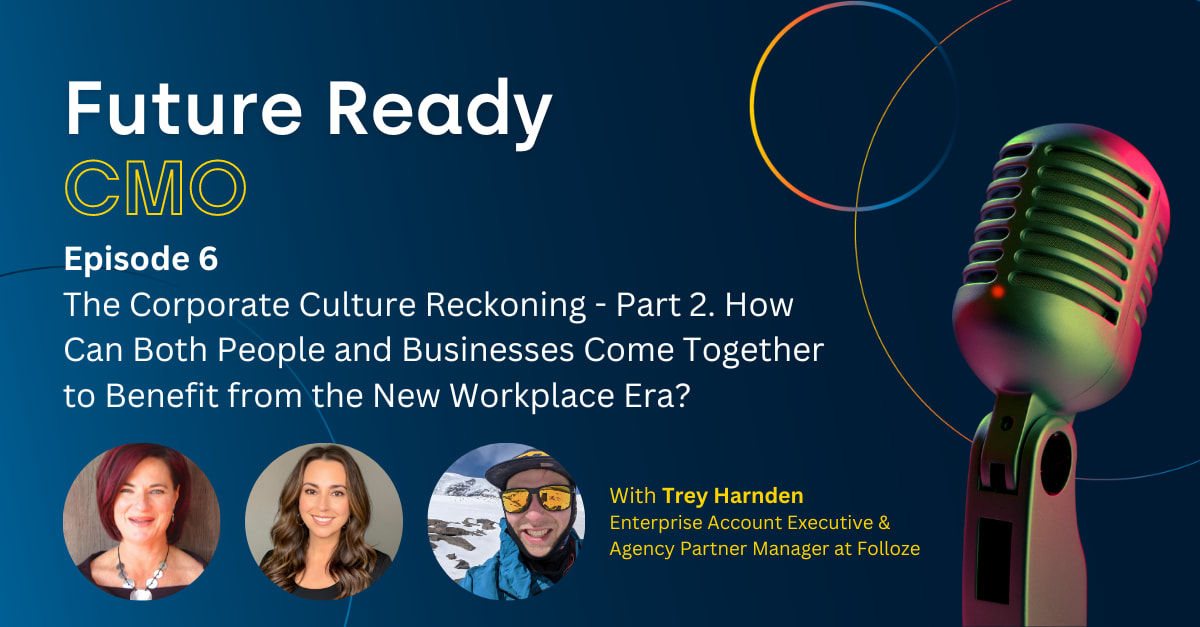
In this episode of the Future Ready CMO podcast, we focused on the increasingly common trend of employees pursuing "side hustles" or additional income-generating activities outside of their primary jobs. The discussion explored the motivations behind these side hustles, their impact on the individuals' primary roles, and how companies can embrace and support this trend.
Listen Now
Key speakers
- Dee Anna Paredes, Host of the Future Ready CMO podcast
- Mary Gilbert, Co-host of the Future Ready CMO podcast
- Trey Harnden, Enterprise Account Executive & Agency Partner Manager at Folloze
Agenda
- Introduction to the topic of side hustles
- Discussion with Trey about his side hustles and how they impact his primary role
- Insights on how companies can support employees with side hustles
- Reflection on the changing nature of work and the rise of the gig economy
Takeaways
Takeaway 1: The shift towards side hustles and the significance of transparency.
The discussion highlighted the increasing trend of employees having side hustles outside their main job. This shift is not just driven by a desire for extra income but is often seen as a necessity for long-term security and personal development, especially in an era of job uncertainties. This necessitates a new level of transparency and understanding between employers and employees.
Trey, one of the speakers, underscored his belief in the importance of transparency in discussing side hustles with management: “The transparency helps me not have to feel like there’s something on my shoulder that I'm hiding or being secretive about...it's really nice that management supports me in this too.” He emphasized that his side hustles do not conflict with his main job and that they're pursued during his own time, which is probably why his company is comfortable with it.
Dee Anna mentioned how the shift to remote and hybrid work has accelerated this trend: “For a lot of people in this generation, it's become a necessity for survival because there's no trust anymore in business. There's no trust that they're going to have security or be paid a fair share.”
Takeaway 2: Side hustles can contribute to personal and professional development.
Side hustles are seen not just as a way to earn extra income but as opportunities for personal and professional growth. They provide a platform for employees to develop new skills, explore interests, and gain experiences that may benefit their main job. This view of side hustles as part of a holistic career path is a significant shift in how work and career development are perceived.
Trey explained how his side hustles helped him build valuable skills and experiences that were beneficial in his main job: “The biggest thing that I've learned from the side hustles is that do it for a small amount of pay now because it will definitely help you make more money down the line. Yeah.”
Meanwhile, Mary mentioned how supporting employees' side hustles can be beneficial for employers: “So if we really want to be an employee first organization, we are going to allow our employees a level of autonomy and maturity to take matters into their own hands for their own personal long-term, either financial security or skills development security.”
Takeaway 3: The future of work requires a new mindset from both employees and employers.
The discussion underscored that the future of work requires a new mindset from both employees and employers. For employees, this involves recognizing the value of side hustles for personal and professional development and being proactive in pursuing them. For employers, it means being open to employee side hustles, supporting their employees' personal and career goals, and recognizing the benefits of having a diversified workforce.
Trey pointed out the need for employees to take control of their careers given the instability of the job market: “Knowing that that's the type of environment that we're in, you have to, as an employee, think of it with that hat on, too, about like, all right, if they're going to do that to me, I have to be ready on my own to look after number one.”
Mary also emphasized the need for employers to support their employees' side hustles: “If we're going to want to exercise the flexibility to bring them in and out because that's the way that our financial structures work in our business, then they should also have the opportunity to come in and out of business or protect themselves on the side.”
Insights surfaced
- Side hustles are often driven by a need for financial security and a desire for personal development.
- Transparency and openness about side hustles can lead to better relationships between employees and management.
- Companies can benefit from employees' side hustles as they often lead to skill development that can be applied to the primary job.
- The rise of remote work and flexible work arrangements have made it easier for employees to pursue side hustles.
- The trend towards side hustles reflects a broader shift in the nature of work, with employees seeking more control and autonomy.
Key quotes
- "The hardest part is just starting. Nothing beats action." - Trey Harnden
- "In today's day in age, the businesses are going to think about their employees strictly in a captial sense where it is "How can I have this employee produce the most amount of value for the company for the least amount of cost?" So the only ethical relationship that you can have with your employer is the reverse of that. How can I produce the most amount of value for my employer in the most efficient manner?" - Trey Harnden
- "If they're just working for my organization, then they're absorbing. But the idea of them bringing in from their experience out there in their own side, hustles into the organization and listening for that, listening for what they're learning and what they're experiencing." - Mary Gilbert
- "I have to be ready on my own to look after number one. It's the only kind of correct way we can do it, unfortunately." - Trey Harnden
- "I think it's central to it, don't get me wrong. I think there's certain types of companies that maybe are more I don't know if hardcore mission driven is the right phrase. There's no denying that if you want to go really hard hacker house style, get five people in a house that are there together 24/7, they're going to out produce a team that is doing it remotely, I think." - Trey Harnden
- "I would like to own a five over one style building. So first floor is commercial and then it is residential units. Above that, I would like to be able to provide housing for our community as well as build a kind of opportunity to create a third space for businesses." - Trey Harnden