About the session
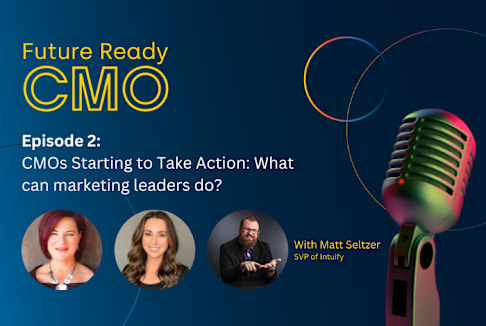
This episode continues a conversation from the first episode about how CMOs can prepare themselves to lead change. The speakers discuss the changing role of marketers, the challenges they face, and how they can become a force for change. The session also features discussions with Matt Rivitz, founder of Sleeping Giants and the Quills; Bonnie Wan, partner and Chief Strategy Officer of Goodbye Silverstein and Partners, and the Founder of the Life Brief; Shelley Paxton, Chief Soul Officer and Founder of Soul Radical; and Grant McDougall, CEO of Blue Ocean AI.
Listen now
Key speakers
- Mary Gilbert, Co-host, Future Ready CMO
- Dee Anna Paredes, Co-host, Future Ready CMO
- Matt Seltzer, Research Partner, Intuify
Agenda
The agenda of the session included:
- Discussion on the changing role of CMOs and the challenges they face
- Insights from various thought leaders on how CMOs can prepare for future changes
- Featuring a discussion with Matt Rivitz on starting a movement and taking on big corporations from our previous webinar Inside a Change Movement to Hold Advertisers Accountable Against Hate
- Discussion on the importance of having a purpose in business
- Insights from Bonnie Wan on the Life Brief and its benefits from our previous webinar The Life Brief for Leaders
Takeaways
Takeaway 1: Fostering talent and navigating a rapidly changing digital landscape are the top pain points for marketing leaders.
During the webinar, Matt Seltzer highlighted the key challenges facing marketing leaders today: "The top three pain points in marketing right now are talent development, navigating VUCA, and navigating a changing digital landscape." He further explained the key obstacles to fostering talent, which included financial constraints, employee skill sets, and a misalignment in priorities. Mary reflected on the rapid pace of change in the industry: "We're all going through this change together, right? We're all learning these new skills together."
Takeaway 2: Business leaders can drive change within their companies by adhering to their principles and maintaining a clear sense of purpose.
Matt Rivitz is featured from our previous webinar encouraging business leaders to establish a clear set of principles to guide their decision-making. He explained, "I think mostly you need to set out an agenda for yourself and your company from a moral standpoint and what lines are you not willing to cross, what do you believe in?" He further emphasized the importance of sticking to these principles regardless of the situation, arguing that companies that do so will be better equipped to respond to crises.
Takeaway 3: The role of a CMO is changing to involve thinking horizontally across the business.
Grant McDougall is quoted mentioning that Future Ready CMOs need to be generalists, explaining that "their job is to think horizontally when no one else is thinking horizontally through the company." This involves a shift in mindset and a broadening of perspectives, allowing CMOs to drive change and innovation within their organizations.
Takeaway 4: Marketers need to focus on creating 'ripples of impact' rather than simply pursuing a return on investment.
This perspective was shared by Shelley Paxton, who argued that marketers should redefine how they think about ROI, seeing it instead as 'ripples of impact' in our inaugural fireside chat. She is quoted explaining, "I'm on a mission to redefine how we think about ROI as well. I say ripples of impact instead of return on investment." This shifts the focus from short-term financial gains to long-term, sustainable impact.
Takeaway 5: Intuition is a valuable tool for navigating change and developing new skills.
Several speakers emphasized the importance of intuition in leading change. Dee Anna Paredes noted, "This is where the idea of going inward, listening to your intuition and navigating a course through feeling is key." Bonnie Wan is quoted from her previous webinar mentioning that creating a framework of values, beliefs, and a vision is crucial for fine-tuning your ability to hear your intuition.
Insights surfaced
- CMOs are seeing their role changing rapidly, which brings both anxiety and excitement.
- The top three pain points in marketing are talent development, navigating VUCA (Volatility, Uncertainty, Complexity, and Ambiguity), and navigating a changing digital landscape.
- There is a misalignment of priorities within organizations, with many focusing on the present and neglecting future needs.
- There is a need for a shift in mindset and a redefinition of success, with a focus on creating ripples of impact rather than just return on investment.
- Business leaders can start movements within their own companies, and CMOs, in particular, can lead change if they think horizontally across the business.
Key quotes
- "So a Future Ready CMO knows that they won't be good at everything. They'll have to be a generalist. And their job is to think horizontally when no one else is thinking horizontally through the company." - Grant McDougall
- "We're bringing people together to inspire and co-create the strategies and develop the capacity to be leaders." - Dee Anna Paredes
- "We have to change our internal landscape, our view of what success looks like, the role we want to play in the world." - Mary Gilbert
- "I say ripples of impact instead of return on investment. And the truth as a business person is of course, I know that we need both. I think one builds on the other." - Shelley Paxton
- "But I think people end up respecting you a lot more. Even if you're risking things a little bit, they respect you a lot more if you say, no, that doesn't feel right." - Matt Rivitz
About Matt Seltzer
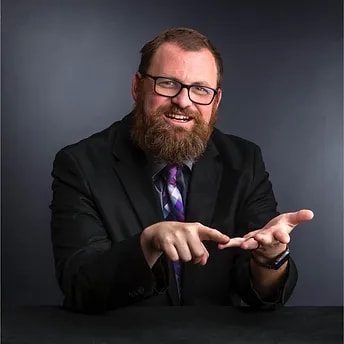
A life-long marketer, Matt started his career conducting market research for one of the most decorated ad agencies in the western US. He continued to maintain a steady freelance research career while simultaneously pursuing more direct marketing opportunities, and also teaching college marketing courses.
Matt has overseen market research and marketing projects at ad agencies and individual brands across travel and tourism, gaming, hospitality, consumer goods and services, for-profit education and commercial real estate. He holds degrees and certifications in marketing, organizational psychology, data analysis and data visualization. Throughout his successful career, he has managed award-winning campaigns of almost every marketing discipline, from cutting-edge advertising, to inspiring public relations, to engaging social media and targeted digital – all while rooting his strategies, messaging and tactical organization in deep, meaningful insights.
Matt started S2 Research because he recognized a need for marketers and market researchers alike. Experienced in both market research and marketing strategy, he saw that ‘the head was not talking enough with the hand’ and realized he could help serve as an effective translator between the two worlds.